Table of contents
Tulum is a coastal city of 46,000 residents in the state of Quintana Roo, Mexico, located 131 km south of Cancun on the Caribbean Sea coast. Founded as the Mayan port of Zama between 1200 and 1450 AD, Tulum receives 2.5 million visitors annually and generates over $800 million USD in tourism revenue. The city serves as a gateway to the second-largest barrier reef on the planet (the Mesoamerican Reef, spanning 1,000 km), more than 6,000 registered cenotes across the Yucatan Peninsula, and the Sian Ka'an Biosphere Reserve covering 528,000 hectares protected by UNESCO since 1987.
Tulum is divided into three main areas: the Hotel Zone (7.5 km of coastal strip with boutique hotels ranging from $150 to $1,200 USD/night), Tulum Town (the urban center with services, local restaurants, and prices 40-60% lower than the Hotel Zone), and the Archaeological Zone (a walled Mayan site spanning 6.5 hectares, the third most-visited archaeological site in Mexico with 1.2 million visitors per year). The average annual temperature is 27C, with dry season from November to April and rainy season from May to October.
Cenotes and Nature: The Peninsula's Geological Treasure#
Cenotes are geological formations unique to the Yucatan Peninsula, created by the dissolution of limestone rock from the Cretaceous period (66 million years ago) accelerated by the Chicxulub asteroid impact. Tulum has more than 100 accessible cenotes within a 30 km radius, with crystal-clear waters averaging 30-60 meters of visibility and constant temperatures of 24-25C year-round.
Must-Visit Cenotes#
Gran Cenote is located 4.5 km from downtown Tulum on the road to Coba. Admission: $500 MXN. Hours: 8:15-16:45. It features underwater stalactites, freshwater turtles, and snorkeling caverns. Cenote Dos Ojos, 22 km north of Tulum, is an underwater cave system with 82.5 km of explored length, ideal for certified cavern diving. Cenote Calavera (Temple of Doom) features three circular openings for jumping from 5 meters height into a 14-meter-deep pool.
For families with children, Cenote Zacil-Ha offers gradually deepening areas starting at 0.5 meters, controlled jumping platforms, and changing rooms with showers. Cenote Cristalino and Cenote Escondido (km 244 on the Tulum-Playa del Carmen highway) are open cenotes with direct access and a combined entrance fee of $350 MXN.
The Sian Ka'an Biosphere Reserve spans 528,000 hectares of tropical jungle, mangroves, lagoons, and coral reef. Declared a UNESCO World Heritage Site in 1987, it shelters 350 bird species, 100 mammal species (including the jaguar, with an estimated 1,500 individuals across the peninsula), 4 sea turtle species, and 10% of Mexico's endemic flora.
Explore the complete cenotes and nature guide for detailed information on each cenote, access routes, updated prices, and conservation tips.
Beaches and Caribbean Coast: 12 km of White Sand#
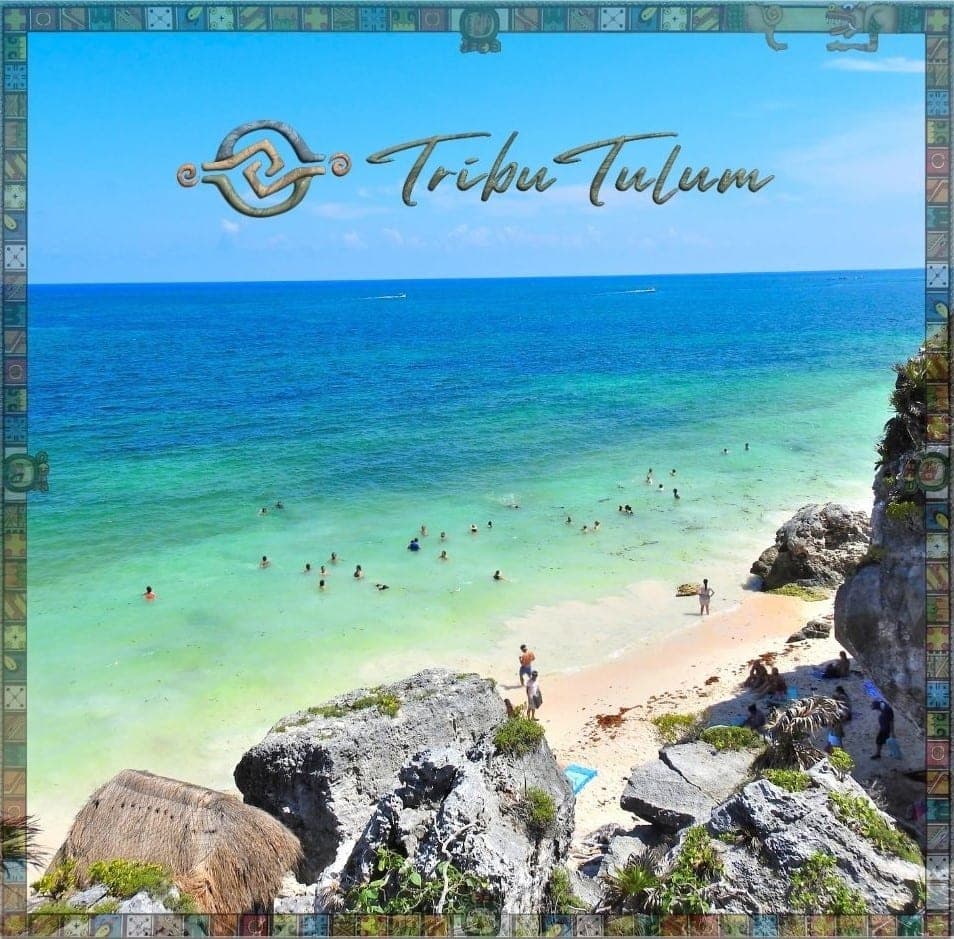
Tulum's beaches stretch along 12 km of Caribbean coastline with white coral-origin sand and turquoise waters averaging 27C. The coastal zone is divided into three segments: north (from the ruins to Playa Paraiso), center (main Hotel Zone with beach clubs), and south (from the entrance arch to the Sian Ka'an Reserve).
Top Beaches#
Playa Paraiso holds the most frequently cited position as "best beach in Mexico" on TripAdvisor, located 800 meters south of the archaeological ruins. Playa Ruinas offers direct access to the archaeological site with views of the Mayan Castillo from the sand, moderate waves, and a reef strip 100 meters from shore. Las Palmas is a free public beach with available parking and access without minimum consumption.
Sargassum season (brown seaweed from the Atlantic) impacts Tulum's beaches most intensely between April and August. November through February consistently deliver clean beaches. Hotels in the Hotel Zone deploy cleaning crews at 6:00 AM with nets and machinery to keep their stretches clear during peak season.
Beach clubs represent the iconic experience of Tulum's coast. Papaya Playa Project hosts full moon parties with capacity for 2,000 people. Be Tulum operates as a luxury beach club with a $2,500 MXN minimum consumption. Ziggy Beach combines Mediterranean cuisine with beach access and no minimum consumption on weekdays.
Tulum's coast offers snorkeling directly from the beach in front of the ruins, where the Mesoamerican Reef comes within 100-200 meters of shore with 15-25 meters of visibility and sightings of green sea turtles, eagle rays, and 40+ species of tropical fish.
Discover all beaches, beach clubs, and water sports with detailed rankings and a sargassum calendar.
Gastronomy and Restaurants: Culinary Capital of the Caribbean#
Tulum is home to over 300 restaurants generating annual revenue exceeding $200 million USD. The culinary scene fuses ancestral Mayan cuisine (cochinita pibil, papadzules, sopa de lima), contemporary Mexican gastronomy, and international farm-to-table and plant-based trends. Tulum hosts 3 restaurants on the Latin America's 50 Best Restaurants 2025 list.
Restaurants by Price Range#
| Range | Price per Person | Examples | Area |
|---|---|---|---|
| Budget | $50-150 MXN ($3-9 USD) | Taqueria Honorio, El Chicharron, street tacos | Town |
| Mid-range | $150-500 MXN ($9-30 USD) | Burrito Amor, Raw Love, Kitchen Table | Town / Hotel Zone |
| Upscale | $500-1,500 MXN ($30-90 USD) | Hartwood, Arca, NuTulum | Hotel Zone |
| Luxury | $1,500+ MXN ($90+ USD) | Noma Tulum (pop-up), private dining experiences | Hotel Zone |
Essential Local Cuisine#
Cochinita pibil is pork marinated in achiote and sour orange, wrapped in banana leaf, and slow-cooked underground for 8-12 hours in a Mayan oven called a pib. Papadzules consist of tortillas stuffed with hard-boiled egg, bathed in pumpkin seed and epazote sauce -- a dish of pre-Hispanic origin. Tikin xic is whole fish (typically grouper) marinated in achiote and sour orange juice, grilled while wrapped in banana leaf.
Taqueria Honorio, located in downtown Tulum Town, opens from 7:30 AM to 2:00 PM and is considered the most acclaimed taqueria in the region. Cochinita tacos cost $25 MXN each. El Chicharron operates as a street food stall from 6:00 PM to 11:00 PM serving tortas and tacos of chicharron prensado starting at $35 MXN.
Tulum's vegan and plant-based scene includes over 25 dedicated options. Raw Love (smoothie bowls from $180 MXN), Charly's Vegan Tacos (jackfruit and mushroom tacos from $45 MXN), and Co.ConAmor (organic brunch from $150 MXN) lead the offerings. The trend responds to the wellness-focused resident community, which generates 30% of food-and-drink demand outside peak season.
Check out the complete gastronomy guide with detailed reviews, maps, menus, and recommendations by budget and occasion.
Wellness and Yoga: World Capital of Wellness#
Tulum welcomes approximately 180,000 annual visitors motivated by wellness and yoga, generating $150 million USD in direct spending in this category. The offerings include over 50 yoga studios, 30 retreat centers, 40 spas, and more than 100 independent holistic therapy practitioners. Peak wellness season runs from October to April, coinciding with dry season and the Northern Hemisphere winter.
Yoga and Retreats#
Yoga studios offer drop-in classes from $250 MXN ($15 USD) per session. Sanara Hotel & Spa offers daily hatha, vinyasa, and yin yoga classes with ocean views on its open-air platform. Holistika Tulum operates as a 5-hectare retreat center in the jungle with integrated lodging and programs ranging from 3 to 21 days, starting at $800 USD per week (all-inclusive). Yoga Dicha offers Yoga Alliance-certified RYT-200 teacher training with 28-day programs at $2,800 USD.
Wellness retreats encompass yoga, meditation, fasting, digital detox, ancestral medicine, and personal transformation. Prices range from $500 USD (weekend retreat) to $5,000 USD (14-day all-inclusive program). Retreat occupancy reaches 85% during November through March.
Temazcal and Ancestral Healing#
The temazcal is a Mayan purification ceremony using a semicircular volcanic stone structure heated by fire, medicinal herbs, and traditional chanting. Sessions last 60-90 minutes and cost between $500 and $2,000 MXN. Holistika, Maya Tulum, and independent centers in the jungle offer ceremonies 3-5 times per week.
Cacao ceremonies combine ceremonial cacao from Tabasco (40-42g per dose) with guided meditation and live music. Sound baths employ Tibetan singing bowls, gongs, and didgeridoo in 75-minute sessions. Breathwork uses holistic techniques such as circular breathing and Wim Hof methods.
Explore the complete wellness and yoga guide with a studio directory, retreat calendar, and therapy reviews.
Adventure and Activities: From Jungle to Reef#
Tulum serves as a base for adventure activities within a 30-150 km radius. Cenote diving attracts 200,000 divers annually to 4 world-class cenotes: Dos Ojos (82.5 km of explored system), The Pit (119 meters deep with halocline at 30 meters), Angelita (hydrogen sulfide cloud phenomenon at 30 meters), and Car Wash (unique underwater flora). Cenote dive prices range from $120 to $250 USD for two tanks with equipment.
Kitesurfing operates on the northern beach zone with consistent 15-25 knot winds from November to April. Schools offer 3-day courses starting at $350 USD. Paddleboarding is popular at Kaan Luum Lagoon (80 meters maximum depth with a submerged cenote at the center) and in the Sian Ka'an mangrove channels.
Day trips connect Tulum with Coba (45 minutes, Nohoch Mul pyramid at 42 meters), Chichen Itza (2.5 hours, one of the Seven Wonders of the Modern World), Valladolid (2 hours, colonial city with urban cenotes), Bacalar (3 hours, Lagoon of Seven Colors), and Playa del Carmen (1 hour, Quinta Avenida and ferry to Cozumel).
Discover all activities and adventures with prices, certified operators, and recommendations by experience level.
Culture and History: From 13th-Century Mayan Port to Global Destination#
The Tulum Ruins are the only Mayan archaeological site built directly on the sea. The 6.5-hectare site includes El Castillo (the main structure standing 7.5 meters tall, aligned with the sunrise on the solstice), the Temple of the Frescoes (polychromatic murals from the 13th century depicting Mayan deities), and the Temple of the Descending God (a figure of Ah Muzen Cab, the Mayan god of bees). Hours: 8:00 AM-5:00 PM daily. Admission: $90 MXN. Official guide: $800-1,200 MXN per group.
Tulum operated as a Mayan trading port called Zama ("dawn" in Maya) between 1200 and 1450 AD, controlling maritime trade routes for jade, obsidian, cacao, and quetzal feathers along the Caribbean coast. The city was still inhabited when the Spanish arrived in 1518, making it one of the last functioning Mayan cities.
Tulum's contemporary art scene includes SFER IK (an immersive art museum by the IK Lab collective, admission $600 MXN), galleries in the Hotel Zone, street murals in Tulum Town, and events such as Art With Me (an annual art and music festival in November with 15,000 attendees).
Learn about the full history, ruins, and living culture with detailed guides for each site and a cultural events calendar.
Living in Tulum: The Resident's Guide#
Tulum records annual population growth of 8.5%, driven by digital nomads, entrepreneurs, and foreign retirees. The expat community is estimated at 8,000-12,000 permanent residents from 50+ nationalities. The average monthly cost of living ranges from $1,600 USD (basic: studio apartment in La Veleta, eating in town, biking for transport) to $5,000+ USD (luxury: apartment in Aldea Zama, Hotel Zone restaurants, personal vehicle).
The real estate market offers apartments starting at $80,000 USD in La Veleta up to $250,000+ USD in Aldea Zama. Foreigners purchase property in the restricted zone (50 km from the coast) through a bank trust (fideicomiso) with an annual cost of $500-1,000 USD. Return on investment for vacation rentals (Airbnb) averages 8-15% annually with 65-80% occupancy.
Coworking spaces include Digital Jungle ($2,500 MXN/month for a hot desk), Aldea Coworking, and multiple cafes with 30-50 Mbps WiFi. Internet infrastructure has improved with fiber optic availability in the main neighborhoods since 2024, with speeds of 100-300 Mbps for $500-800 MXN per month.
Read the complete guide to living in Tulum with information on visas, property, cost of living, and the expat community.
Practical Guide: How to Get There, Get Around, and Plan#
Getting There#
| Origin | Method | Duration | Cost |
|---|---|---|---|
| Cancun Airport (CUN) | ADO Bus direct | 2.5-3 hours | $380-520 MXN |
| Cancun Airport (CUN) | Private transfer | 1.5-2 hours | $120-180 USD |
| Cancun Airport (CUN) | Colectivo (via Playa del Carmen) | 3-4 hours | $180 MXN total |
| Playa del Carmen | Colectivo | 45-60 minutes | $55 MXN |
| Merida | ADO Bus | 4 hours | $450-600 MXN |
Local Transportation#
Bicycles are the primary mode of transport in Tulum Town, with rentals from $100-300 MXN/day ($150 average). The distance from town to the Hotel Zone is 3.5 km with a partial bike lane. Taxis from town to the Hotel Zone cost $80-150 MXN (flat rate, no meter). Colectivos on Federal Highway 307 run every 10-15 minutes in both directions.
Best Time to Visit#
| Season | Months | Weather | Price | Sargassum | Rating |
|---|---|---|---|---|---|
| Peak | Dec-Mar | 24-30C, dry | $$$ | Low | Ideal for beaches |
| Shoulder | Apr-Jun | 28-34C, humid | $$ | High | Ideal for cenotes |
| Low | Jul-Oct | 28-33C, rainy | $ | Variable | Best prices |
| Turtle Season | May-Nov | 27-33C | $$-$ | Variable | Nesting and hatching |
Hurricane season runs from June to November with highest probability in September-October. Tulum was impacted by Hurricane Delta (2020, Category 2) and Tropical Storm Gamma (2020). Infrastructure has improved with evacuation protocols and temporary shelters set up by the municipality.
Safety#
Tulum records lower tourist crime rates than Cancun and Playa del Carmen. Standard precautions apply: don't leave valuables on the beach, use hotel safes, avoid walking the Hotel Zone road after 11:00 PM without a flashlight (there is no street lighting). Tourist police operate at the Archaeological Zone and at the Hotel Zone entrance.
Estimated Daily Budget#
| Style | Accommodation | Food | Activities | Total/Day |
|---|---|---|---|---|
| Backpacker | $300-500 MXN (hostel) | $200-350 MXN | $200-400 MXN | $700-1,250 MXN ($40-75 USD) |
| Mid-range | $1,500-3,000 MXN (boutique hotel) | $500-800 MXN | $500-1,500 MXN | $2,500-5,300 MXN ($150-315 USD) |
| Luxury | $5,000-20,000 MXN (resort) | $1,500-3,000 MXN | $1,000-4,000 MXN | $7,500-27,000 MXN ($450-1,600 USD) |
Check out the complete practical travel guide with detailed information on transportation, accommodation, safety, money, communications, and health.
Complete Guide Map#
This Tulum guide covers 8 main topics with 78 specialized articles:
- Cenotes and Nature - 10 guides: best cenotes, hidden cenotes, cenotes for families, photography, Sian Ka'an, flora and fauna, sea turtles, conservation, Mayan cosmology, geology
- Beaches and Caribbean Coast - 8 guides: best beaches, beach clubs, beaches for families, sargassum calendar, nightlife, snorkeling, sunsets, water sports
- Gastronomy and Restaurants - 12 guides: best restaurants, budgets, Mexican cuisine, vegan, cafes, street food, bars, Hotel Zone vs town, food tours, seafood, Yucatecan cuisine, culinary history
- Wellness and Yoga - 8 guides: yoga and retreats, wellness retreats, temazcal, spas, holistic healing, meditation, nutrition, spirituality
- Adventure and Activities - 9 guides: diving, cenote snorkeling, kayaking, ATV and zip-line, cycling, birdwatching, day trips, fishing, eco-tourism
- Culture and History - 8 guides: Tulum Ruins, Coba, Mayan culture, art and galleries, shopping, events, weddings, history
- Living in Tulum - 12 guides: relocating, buying property, real estate market, neighborhoods, cost of living, fideicomiso, visa, healthcare, digital nomads, Airbnb, expat community, education
- Practical Travel Guide - 11 guides: getting there, local transport, best time to visit, accommodation, budget, safety, money, communications, health, weather, packing