Table of contents
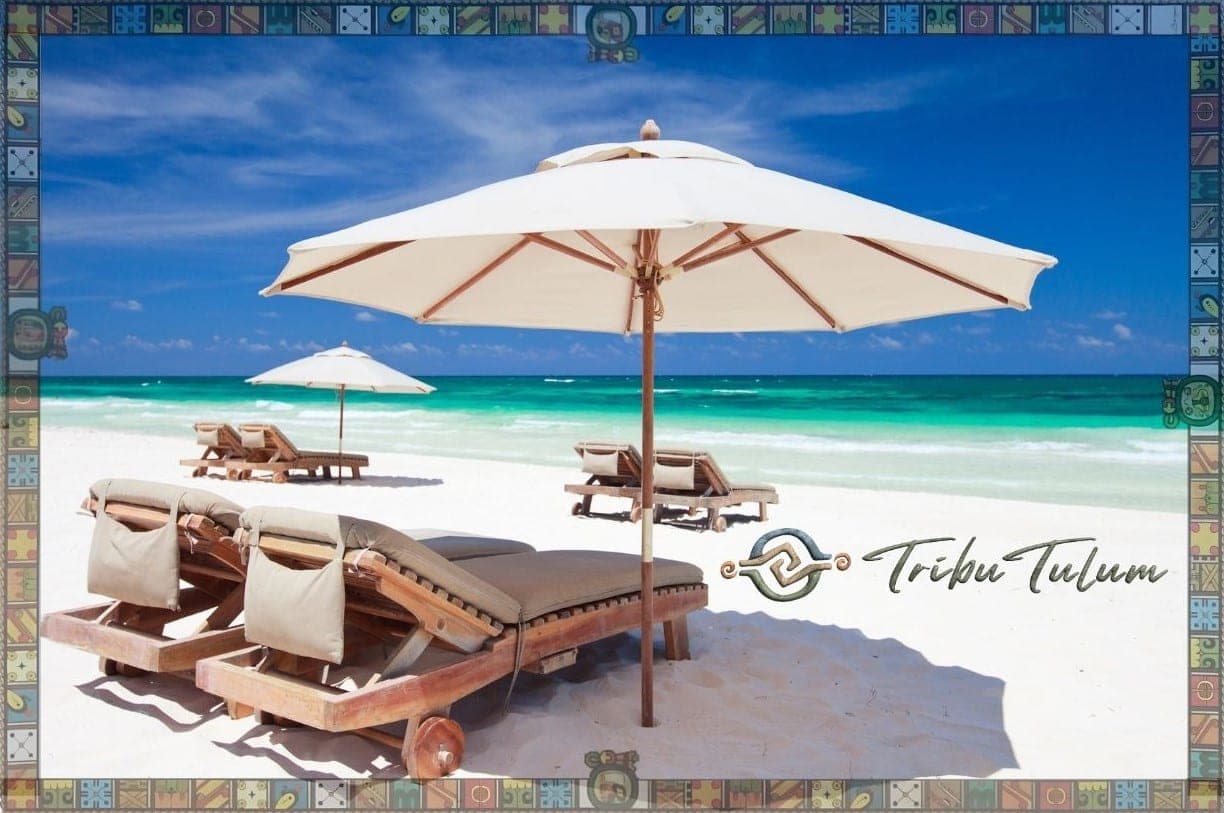
Tulum's beaches stretch along 12 km of Caribbean coastline with fine-grain white sand composed of pulverized coral and microscopic shells. The Caribbean Sea maintains an average temperature of 27°C (ranging from 25°C in January to 29°C in August) with underwater visibility of 15-25 meters on calm days. The coastal strip is divided into three distinct segments: north beach (from the archaeological zone to Playa Paraiso, 3 km, public access), central beach (main hotel zone, 5 km, mixed access between beach clubs and public stretches), and south beach (from the hotel zone arch to the Sian Ka'an Reserve, 4 km, low density and limited access via dirt road).
Tulum's coast is part of the Mesoamerican Reef System, the second-largest barrier reef in the world stretching 1,000 km from Honduras to Isla Contoy. The reef approaches 100-200 meters from shore in front of the archaeological ruins, allowing snorkeling directly from the beach with sightings of green turtles, eagle rays, angelfish, and barracudas among 40+ tropical fish species.
Best Beaches of Tulum: Ranking by Zone#
Each beach along Tulum's coast has its own characteristics of surf, access, services, and infrastructure. The following ranking is based on a combination of sand quality, water clarity, service availability, and public accessibility.
Playa Paraiso#
Playa Paraiso consistently holds the position of "best beach in Mexico" in TripAdvisor and Lonely Planet rankings. Located 800 meters south of the archaeological ruins, accessible via a 10-minute walking path from the ruins' parking lot ($200 MXN parking) or by the coastal road. The beach measures 400 meters in length with ultra-fine white sand and turquoise water of gradual depth (1 meter at 30 meters from shore). Waves are moderate (0.3-0.8 meters), reduced by reef protection. Two beachfront restaurants operate with tables on the sand: minimum consumption of $300-500 MXN per person. No entry fee. Limited natural shade; portable palapa recommended.
Playa Ruinas#
Playa Ruinas is the only beach in Mexico with a direct view of a Maya archaeological site. Access is by descending a 70-step stone stairway from inside the archaeological zone (requires site entry payment: $90 MXN). The beach measures 200 meters in length, flanked by 8-12 meter cliffs with El Castillo crowning the view. The reef in front of this beach is the closest to shore (80-100 meters), offering the best direct-from-sand snorkeling in the entire region. No food services or equipment rental on the beach. Hours restricted to ruins schedule: 8:00-17:00.
Las Palmas#
Las Palmas serves as a free public beach with free parking, located 2 km south of the hotel zone arch. It measures 300 meters long with coconut palms providing natural shade. No minimum consumption or restaurant services, though vendors offer fresh coconuts ($50 MXN) and fruit cocktails. Surf is low to moderate. Ideal for visitors seeking a beach experience without beach club spending.
Playa Pescadores#
Playa Pescadores is located north of the hotel zone, between the ruins and the first hotels. Named for local fishermen who launch their pangas from this beach every morning at 5:00 AM. Compact sand, ideal for walking. Moderate to high surf during nortes season (November-February). Chamicos restaurant operates on the beach with fresh seafood (ceviche from $180 MXN, whole fish from $250 MXN).
Ziggy Beach#
Ziggy Beach combines a semi-public beach with a mid-range beach club. Located at km 5 of the coastal road. No minimum consumption Monday through Thursday; minimum consumption of $500 MXN Friday through Sunday. Fine sand with loungers, palapa umbrellas, and waiter service. Mediterranean cuisine with a menu of $200-600 MXN per dish. DJ set on Saturdays from 14:00.
See the complete ranking of Tulum's best beaches with maps, photos, and tips for each beach.
Beach Clubs: The Signature Coastal Experience#
Tulum's beach clubs operate as coastal social hubs combining beach, gastronomy, music, and atmosphere. The hotel zone concentrates over 30 beach clubs with business models ranging from free access to minimum consumption of $5,000 MXN per person.
Beach Clubs by Style#
| Beach Club | Style | Min. Consumption | Specialty | Hours |
|---|---|---|---|---|
| Papaya Playa Project | Party / Bohemian | $500-1,500 MXN | Full moon parties, 2,000 people | 10:00-02:00 |
| Be Tulum | Luxury / Exclusive | $2,500 MXN | Chef cuisine, beach spa | 10:00-22:00 |
| Ziggy Beach | Casual / Mediterranean | $0-500 MXN | Mediterranean cuisine, DJ sets | 10:00-23:00 |
| Casa Malca | Art / Luxury | $1,500 MXN | Art collection, infinity pool | 10:00-20:00 |
| Ahau Tulum | Bohemian / Wellness | $800 MXN | Ven a la Luz sculpture, yoga | 9:00-22:00 |
| Nomade | Holistic / Luxury | $1,200 MXN | Ceremonies, artisan market | 8:00-23:00 |
| Coco Tulum | Party / Accessible | $300 MXN | Cocktails, snacks, loud music | 10:00-01:00 |
| Rosa del Viento | Family / Quiet | $400 MXN | Seafood, relaxed atmosphere | 9:00-20:00 |
Papaya Playa Project hosts the most renowned full moon parties in the Riviera Maya with international DJs, electronic music, and capacity for 2,000 attendees. Tickets range from $500 MXN (general) to $3,000 MXN (VIP table). The 2026 full moon calendar includes events on January 13, February 12, March 14, April 12, May 12, June 11, July 10, August 9, September 7, October 7, November 5, and December 4.
Casa Malca, owned by Colombian art collector Lio Malca, displays original works by Jean-Michel Basquiat, KAWS, and Keith Haring in a hotel-beach club with an infinity pool over the cliff. Beach club entry includes gallery access.
Discover the complete beach clubs guide with reviews, photos, menus, and tips for every budget.
Sargassum Calendar: When to Come for Clean Beaches#
Sargassum (Sargassum natans and Sargassum fluitans) is a pelagic brown seaweed from the Atlantic that arrives on the Mexican Caribbean coast in varying quantities depending on ocean currents, water temperature, and nutrients. Since 2015, massive arrivals have increased 10x compared to historical averages, affecting the entire Riviera Maya.
Monthly Sargassum Calendar for Tulum#
| Month | Sargassum Level | Clean Beaches | Recommendation |
|---|---|---|---|
| January | Low | 90%+ | Ideal season |
| February | Low | 90%+ | Ideal season |
| March | Low-Medium | 80% | Good season |
| April | Medium-High | 50-60% | Variable; check beforehand |
| May | High | 30-50% | Peak sargassum begins |
| June | High | 20-40% | Strong peak |
| July | High | 20-40% | Strong peak |
| August | High | 30-50% | Starting to decrease |
| September | Medium | 50-70% | Variable |
| October | Medium-Low | 70-80% | Improving |
| November | Low | 85%+ | Good season |
| December | Low | 90%+ | Ideal season |
Hotels in the hotel zone employ cleanup crews of 20-50 workers from 5:00 AM, using manual nets and light machinery to remove sargassum from their beach sections. 4-5 star hotels keep their sections clear year-round. Public beaches depend on the municipal cleanup program with less frequency.
UNAM's Sargassum Monitoring Network publishes weekly reports with satellite predictions of arrivals on the Quintana Roo coast. Prediction models use Sentinel-2 satellite imagery with 72-hour accuracy.
Check the complete sargassum calendar with real-time data and weekly forecasts.
Family-Friendly Beaches#
Families with children need beaches with gentle surf, gradual depth, available shade, and sanitary facilities. Tulum offers specific options.
Playa Paraiso features gradual depth (1 meter at 30 meters from shore) with reduced surf from the reef barrier, ideal conditions for children 3+ years old. Las Palmas offers natural palm shade without additional equipment needed. Rosa del Viento (beach club) maintains a quiet family atmosphere with a play area and children's menu from $120 MXN.
Northern beaches (near the ruins) have lower surf than central and south hotel zone beaches, where currents can intensify, particularly during nortes season (November-February). Warning flags (green=safe, yellow=caution, red=danger) are placed at main beaches.
Read the family-safe beach guide with safety ratings by beach.
Nightlife: Bars, Parties, and Events#
Tulum offers a unique nightlife that combines jungle parties, electronic music at beach clubs, mezcal bars in town, and full moon events on the beach. The nightlife scene operates with a model distinct from Cancun or Playa del Carmen: intimate venues for 200-2,000 people, bohemian aesthetics, organic electronic music (deep house, afro house, downtempo), and natural-element decor.
Main Venues#
Papaya Playa Project leads the scene with full moon parties (monthly), Saturday Night Market (weekly, free), and special New Year's and Easter events. Capacity: 2,000 people. Location: km 4.5 coastal road.
Gitano operates as a mezcal bar and jungle restaurant with capacity for 300 people. Menu of 35+ Oaxacan mezcals ($150-500 MXN per glass). Live music Thursday through Saturday. Location: coastal road km 7.
Batey functions as a mojito bar in downtown Pueblo with live music daily from 19:00. Mojitos are prepared in a vintage sugarcane press ($120-180 MXN). Casual atmosphere, no cover. It is the meeting point for the local and expat community.
Casa Jaguar combines a restaurant and secret jungle bar with candle-lit tables among trees. Ceviche menu ($180-280 MXN) and craft cocktails ($200-350 MXN). Reservations recommended 48 hours in advance.
Jungle parties occur at rotating locations communicated through Instagram and local WhatsApp groups. Entry: $300-800 MXN. Typical hours: 22:00-04:00. Municipal police patrol the hotel zone until 02:00; nightlife activity shifts to jungle venues after that hour.
Explore the complete Tulum nightlife guide with event calendar, bar reviews, and safety tips.
Snorkeling and Water Sports#
Beach Snorkeling#
The Mesoamerican reef in front of the Tulum ruins allows snorkeling without a boat. The reef is 80-100 meters from shore at a depth of 2-5 meters on the coral crest. Average visibility is 15-25 meters. Common species include green turtle (Chelonia mydas), eagle ray (Aetobatus narinari), queen angelfish (Holacanthus ciliaris), parrotfish (Sparisoma viride), barracuda (Sphyraena barracuda), and moray eel (Gymnothorax funebris). Snorkel gear can be rented at the ruins entrance for $150 MXN.
Akumal, 25 km north of Tulum, offers swimming with sea turtles in a protected bay. The visit requires a mandatory life vest and certified guide ($400 MXN per person, 45 minutes). Turtle sighting success rate is 95% year-round.
Water Sports#
| Activity | Season | Price | Duration | Level |
|---|---|---|---|---|
| Kitesurfing | Nov-Apr | $350 USD (3-day course) | 3-4 hours/day | Beginner to advanced |
| Paddleboarding | Year-round | $300-500 MXN/hour | 1-3 hours | Beginner |
| Mangrove kayaking | Year-round | $500-800 MXN | 2-3 hours | Beginner |
| Windsurfing | Nov-Mar | $200 USD (2-day course) | 2-3 hours/day | Beginner to intermediate |
| Jet ski | Year-round | $1,500-2,500 MXN | 30-60 min | No experience required |
| Parasailing | Year-round | $1,200-1,800 MXN | 15 min | No experience required |
The north beach zone (between the ruins and Playa Paraiso) receives consistent winds of 15-25 knots during November-April, ideal conditions for kitesurfing. Three kitesurfing schools operate in this zone: Mexican Caribbean Kitesurf, Extreme Control, and Morph Kiteboarding.
Discover beach snorkeling options and water sports with certified operators and equipment.
Sunsets: The Best Spots#
Sunsets on Tulum's Caribbean coast occur between 17:30 (December) and 19:30 (June). The east-facing coast means the sun sets over the jungle and lagoons, not directly over the sea. The best sunset spots with horizon views are:
- Playa Ruinas: El Castillo silhouetted against the orange sky, best from November to February
- Papaya Playa rooftop: 360° panoramic view from the hotel terrace, access with consumption
- Laguna Kaan Luum: The sun reflects in the turquoise lagoon 80 meters deep, 10 km from town
- Ahau Tulum: The "Ven a la Luz" sculpture framed against the sunset, iconic Tulum photo op
Discover the best sunset spots with seasonal schedules and photography tips.