Table of contents
The best cenotes near Tulum are Gran Cenote (500 MXN, 4 km from town), Cenote Dos Ojos (400 MXN, ideal for diving), Cenote Calavera (250 MXN, perfect for photos), and Casa Cenote (connected to the sea via underground river). The Yucatan Peninsula harbors over 6,000 registered cenotes, and Tulum offers access to the 15 most spectacular within a 30 km radius. Entry prices range from 50 to 500 MXN per person, with general hours of 8:00 to 17:00. This guide brings together the 10 must-visit cenotes with updated prices, hours, activities, and recommendations by traveler profile.
What Is a Cenote and Why Does Tulum Have So Many?#
A cenote is a geological formation created by the dissolution of limestone that exposes the underground aquifer of the Yucatan Peninsula. The term comes from the Maya dz'onot (water-filled cavity). The peninsula has no surface rivers because its limestone bedrock, formed 65 million years ago, filters all rainwater into a system of underground rivers connecting thousands of cavities to each other.
The Yucatan Peninsula has over 6,000 cenotes registered by Mexico's National Institute of Statistics and Geography (INEGI). Tulum sits atop one of the zones with the highest concentration: 15+ accessible cenotes within 30 km of town, distributed along the Tulum-Coba highway and federal highway 307.
Four main types of cenotes exist based on their morphology:
- Open cenote: No roof, exposed to the sky. Example: Casa Cenote.
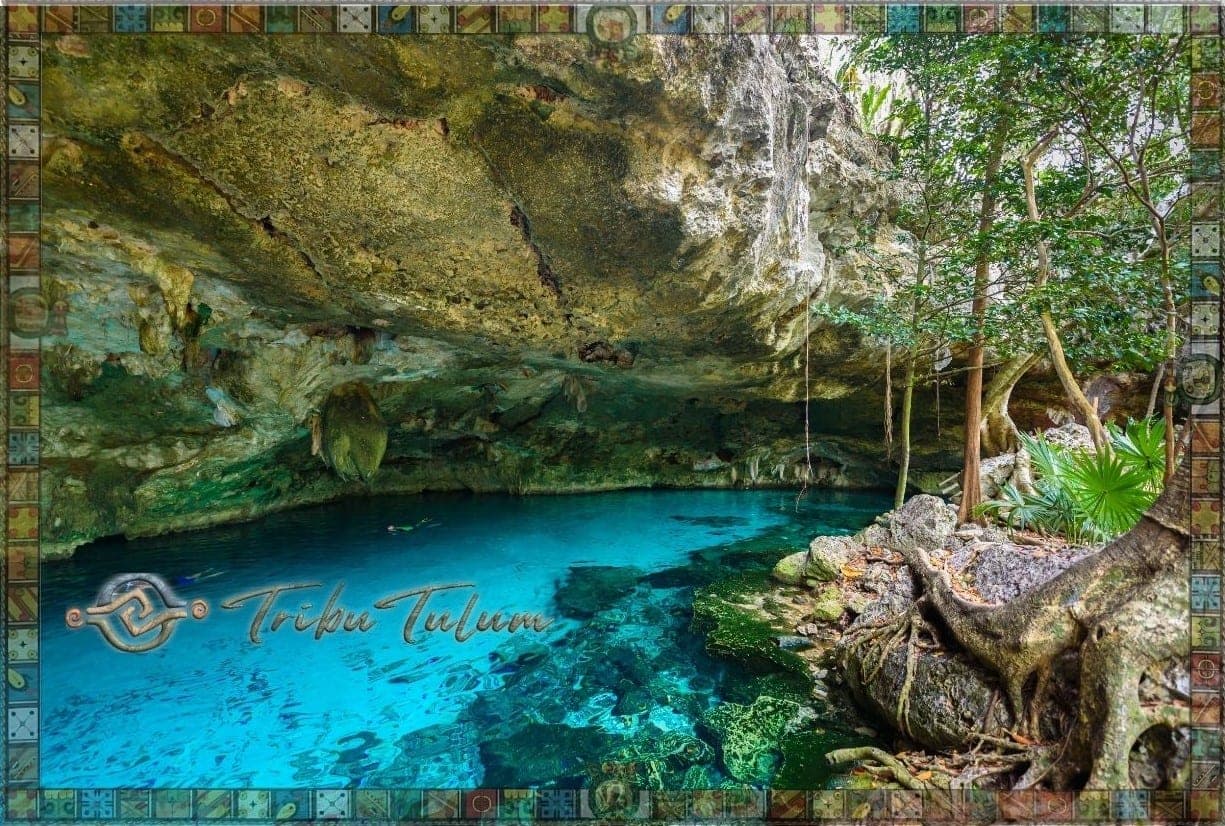
- Semi-open cenote: Partially covered by limestone with stalactite formations. Example: Gran Cenote.
- Cavern cenote: Small entrance leading to a large underground chamber. Example: Cenote Taak Bi-Ha.
- Cave cenote: Completely underground, accessible only by diving. Example: Cenote Angelita.
Ranking: The 10 Best Cenotes Near Tulum#
Cenote entry prices in Tulum range from 50 to 500 MXN per person. Gran Cenote costs 500 MXN, Cenote Dos Ojos 400 MXN, Cenote Taak Bi-Ha 350 MXN, and Cenote Calavera 250 MXN. Most open from 8:00 to 17:00 and require cash payment.
1. Gran Cenote: The Most Popular and Accessible#
Gran Cenote is a semi-open cenote located 4 km from central Tulum on the Coba highway. It holds the #1 position for its combination of accessibility, beauty, and variety of activities. The crystal-clear waters allow visibility of up to 15 meters, with submerged stalactites creating a unique underwater landscape.
Practical details:
- Price: 500 MXN per person (cash)
- Hours: 8:00 to 16:45, every day
- Distance: 4 km from central Tulum (10 minutes by bicycle)
- Type: Semi-open with stalactite and stalagmite formations
- Depth: 10 meters at the deepest zone
Reasons to visit: Snorkeling among freshwater turtles, wooden platforms for resting, and entry into semi-submerged cave systems. Turtles swim alongside visitors in the early mornings (8:00-9:30).
Ideal for: Families with children, snorkeling beginners, photographers seeking natural light filtered through limestone.
2. Cenote Dos Ojos: The Best for Diving#
Cenote Dos Ojos is a submerged cave system formed by two cenotes connected by a 400-meter underwater tunnel. It is part of Sac Actun, the world's largest submerged cave system with 371 km explored. The name refers to the two circular openings that resemble eyes when viewed from above.
Practical details:
- Price: 400 MXN per person (main cenote); 700 MXN access to three cenotes
- Hours: 9:00 to 17:00
- Distance: 22 km north of Tulum (20 minutes by car)
- Type: Cave with two eyes connected by underwater tunnel
- Depth: Up to 120 meters in technical diving zones
Reasons to visit: Certified cave diving with 30+ meter visibility, ancient stalactite formations, and the famous "Bat Cave." Snorkeling allows you to see the freshwater-saltwater transition (halocline).
Ideal for: Certified divers (PADI Open Water minimum), adventurers, and underwater photographers. Check the complete cenote diving guide for certification requirements.
3. Cenote Calavera: The Most Instagrammable#
Cenote Calavera is an open cenote with 3 openings in the limestone that form the silhouette of a human skull. The main opening measures 5 meters in diameter with a 4-meter free fall to the water. The two smaller lateral openings complete the "eye" shape of the skull.
Practical details:
- Price: 250 MXN per person; life vest 50 MXN additional
- Hours: 9:00 to 17:00
- Distance: 3 km from central Tulum, Coba highway
- Type: Open with 3 openings (skull shape)
- Depth: 14 meters
Reasons to visit: 4-meter jumps from the main opening, dramatic natural lighting at noon (sunbeams penetrate all 3 openings), and walls covered in roots descending to the water.
Ideal for: Instagram photographers, adventurers who enjoy cliff jumping, and couples seeking a unique setting.
4. Casa Cenote: Where Fresh Water Meets the Sea#
Casa Cenote, also known as Cenote Manati, is an open cenote connected to the Caribbean Sea via an underground river. The water flows through mangroves before emptying into the ocean, creating a unique ecosystem where freshwater and saltwater fish coexist. The average depth of 1.5 meters makes it accessible for all ages.
Practical details:
- Price: 150 MXN per person
- Hours: 9:00 to 17:00
- Distance: 12 km north of Tulum, beach side of highway 307
- Type: Open, surrounded by mangroves, connected to the Caribbean
Reasons to visit: Snorkeling among mangrove roots, spotting sea turtles entering through the underground channel, and kayaking in calm waters. The freshwater-saltwater mix produces a visual "blurry water" effect (halocline) fascinating for photographers.
Ideal for: Families with young children (shallow water), kayakers, and wildlife watchers.
5. Cenote Zacil-Ha: The Calmest and Most Family-Friendly#
Cenote Zacil-Ha is an open cenote with crystal-clear turquoise waters located on the Tulum-Coba highway. With a maximum depth of 3 meters in the central zone, it offers a relaxed atmosphere with zipline, hammocks, and rest areas surrounded by tropical vegetation.
Practical details:
- Price: 300 MXN per person (zipline included with additional charge)
- Hours: 9:00 to 17:00
- Distance: 8 km from central Tulum, Coba highway
- Type: Open, crystal-clear shallow waters
Reasons to visit: Zipline over the cenote, ideal depth for children, underground connection to Gran Cenote and Cenote Car Wash for certified cavern divers.
Ideal for: Families with children, visitors seeking a calm day without crowds, and cenote beginners. Discover more cenotes ideal for families with children.
6. Cenote Taak Bi-Ha: Underground Stalactites#
Cenote Taak Bi-Ha is a cavern cenote with a 12-meter descent via wooden stairs to an underground chamber illuminated by a natural skylight. Stalactites hanging from the ceiling measure up to 3 meters in length, formed over thousands of years by mineralized water filtration.
Practical details:
- Price: 350 MXN per person
- Hours: 9:00 to 16:30
- Distance: 17 km north of Tulum
- Type: Cavern cenote with stalactites and stalagmites
Reasons to visit: Spectacular geological formations, constant water temperature of 24C year-round, and an underground cave atmosphere with limited natural lighting that creates a mystical ambiance.
Ideal for: Geology enthusiasts, photographers of natural formations, and travelers seeking underground experiences.
7. Cenote Aktun Ha (Car Wash): Divers' Favorite#
Cenote Aktun Ha, known as "Car Wash" because Tulum taxi drivers used to wash their cars here in the 1980s, is an open cenote with walls covered in orchids and tropical vegetation. The depth reaches 15 meters with a submerged cave extending 200+ meters.
Practical details:
- Price: 200 MXN per person
- Hours: 9:00 to 17:00
- Distance: 8 km from central Tulum, Coba highway
- Type: Open, ideal for cavern diving
Reasons to visit: Submerged cave system for certified diving, water lilies and algae creating a colorful underwater landscape (best June-September), and accessible pricing compared to Gran Cenote.
Ideal for: Certified cavern divers, underwater photographers, and visitors seeking cenotes less crowded than Gran Cenote.
8. Cenote Cristal and Cenote Escondido: Two for One#
Cenote Cristal and Cenote Escondido sit across from each other on highway 307, south of Tulum. A single entry ticket grants access to both cenotes, separated by 200 meters of jungle path. Cenote Cristal has jumping platforms at 3 and 6 meters; Cenote Escondido is surrounded by dense vegetation with access via wooden stairs.
Practical details:
- Price: 150 MXN per person (access to both cenotes)
- Hours: 9:00 to 17:00
- Distance: 3 km south of Tulum on highway 307
- Type: Both open; Cristal with platforms, Escondido amid vegetation
Reasons to visit: Two cenotes for the price of one, jumping platforms at Cristal, and untouched natural atmosphere at Escondido. Fewer tourists compared to cenotes on the Coba highway.
Ideal for: Backpackers (affordable price), adventurers (jumps), and couples seeking tranquility (Escondido).
9. Cenote Sac Actun: The World's Largest Cave System#
Cenote Sac Actun is the entrance to the most extensive submerged cave system on the planet, with 371 km mapped and 248 connected cenotes. Tourist access allows snorkeling and diving in designated sections with a mandatory guide. Stalactite and stalagmite formations inside the underground chambers date back 10,000+ years.
Practical details:
- Price: 450-650 MXN per person (includes guide and equipment)
- Hours: 9:00 to 15:00 (last access)
- Distance: 20 km from central Tulum
- Type: Submerged cave system, mandatory guided access
Reasons to visit: Unique experience in the world's largest cave system, Maya archaeological remains found in the depths, and geological formations of monumental scale.
Ideal for: Advanced divers (cave certification required for deep dives) and visitors seeking an unrepeatable experience.
10. Cenote Nicte-Ha: Hidden Gem at Dos Ojos#
Cenote Nicte-Ha sits within the Dos Ojos park but receives a fraction of the main cenote's visitors. Its name means "water flower" in Maya. The crystal-clear shallow waters reflect the surrounding vegetation, creating a natural mirror effect. Visiting first thing in the morning (before 11:30) virtually guarantees having it to yourself.
Practical details:
- Price: 200 MXN per person
- Hours: 9:00 to 17:00
- Distance: 22 km north of Tulum (within Dos Ojos park)
- Type: Open, crystal-clear waters, few visitors
Reasons to visit: Peaceful cenote without crowds (10-30 daily visitors vs 200+ at Gran Cenote), ideal for meditation and reflection photography on calm water.
Ideal for: Travelers seeking tranquility, nature photographers, and those who have already visited the popular cenotes. Discover more secret cenotes in Tulum that few people know.
Comparison Table: Cenote Prices, Hours, and Activities in Tulum#
This table summarizes cenote prices in Tulum, hours, and available activities to facilitate planning your visit.
| Cenote | Price (MXN) | Hours | Type | Activities | Ideal For |
|---|---|---|---|---|---|
| Gran Cenote | 500 | 8:00-16:45 | Semi-open | Snorkeling, turtles, caves | Families, beginners |
| Dos Ojos | 400-700 | 9:00-17:00 | Cave | Diving, snorkeling, Bat Cave | Divers, adventurers |
| Calavera | 250 | 9:00-17:00 | Open | Jumps, photos, swimming | Photographers, couples |
| Casa Cenote | 150 | 9:00-17:00 | Open | Snorkeling, kayaking, mangroves | Families, kayakers |
| Zacil-Ha | 300 | 9:00-17:00 | Open | Zipline, swimming, hammocks | Families, relaxation |
| Taak Bi-Ha | 350 | 9:00-16:30 | Cavern | Swimming, stalactites, photos | Geologists, photographers |
| Aktun Ha | 200 | 9:00-17:00 | Open | Diving, snorkeling, orchids | Divers, naturalists |
| Cristal + Escondido | 150 | 9:00-17:00 | Open | Jumps, swimming, two cenotes | Backpackers, couples |
| Sac Actun | 450-650 | 9:00-15:00 | Cave | Guided diving, archaeology | Advanced divers |
| Nicte-Ha | 200 | 9:00-17:00 | Open | Swimming, meditation, photos | Tranquil travelers |
How to Choose the Ideal Cenote for Your Profile#
Each cenote near Tulum offers a distinct experience. Choosing the ideal cenote depends on your budget, aquatic experience level, and type of trip.
- Families with children: Casa Cenote (shallow water at 1.5 m, no currents) or Zacil-Ha (maximum depth 3 m, zipline for older kids). Both have shaded rest areas and easy access without steep stairs.
- Certified divers: Dos Ojos (400 m tunnel, Bat Cave) or Car Wash (200+ m cave system). Book with local operators who provide guide and specialized equipment.
- Photographers: Calavera (light beams at noon, 11:00-13:00) or Nicte-Ha (calm water reflections before 10:00). Bring a waterproof camera or waterproof case.
- Couples: Cenote Escondido (surrounded by jungle, few visitors) or Taak Bi-Ha (cave atmosphere with stalactites, mystical lighting).
- Backpackers: Cristal + Escondido (150 MXN, two cenotes) or Aktun Ha (200 MXN, less crowded than Gran Cenote).
Practical Tips for Visiting Cenotes in Tulum#
- Biodegradable sunscreen mandatory: Cenotes prohibit chemical sunscreen. Buy brands with zinc oxide or titanium dioxide at Tulum pharmacies (80-150 MXN).
- Bring cash: Most cenotes do not accept credit cards. ATMs in central Tulum charge a commission of 30-60 MXN.
- Arrive before 9:00: Gran Cenote and Dos Ojos receive 200+ daily visitors. Before 9:00, you will find 10-20 people.
- Life vest mandatory at several cenotes: Included in the price or with an additional charge of 50 MXN. Ask upon arrival.
- Do not touch stalactites or formations: These are fragile ecosystems that take centuries to form. Follow the cenote etiquette and conservation rules.
- Transportation: Bicycle for cenotes on the Coba highway (4-8 km); car or taxi for Dos Ojos (22 km), Casa Cenote (12 km), and Sac Actun (20 km).
- Season: Year-round. November to February offers lower tourist turnout and water temperature of 24-25C.
- Snorkel gear: Rent at the cenotes (50-100 MXN) or buy in Tulum shops (from 200 MXN).
Plan your complete itinerary with the practical guide for planning your Tulum visit.
Secret Cenotes Few Tourists Know#
Beyond the 10 main cenotes, the Tulum region harbors dozens of community and ejidal cenotes receiving fewer than 30 daily visitors. Cenote Tak Be Ha ("hidden water" in Maya) is 30 minutes from Tulum and offers crystal-clear waters without crowds for 100-200 MXN. Cenote Naharon connects to the Ox Bel Ha system and is an exclusive destination for technical divers. Cenote Xcacel sits alongside the protected sea turtle nesting beach.
Explore the complete list of secret cenotes in Tulum that few people know.
The Geology Behind Cenotes: How Do They Form?#
Cenotes form through the chemical dissolution of limestone (calcium carbonate) from the Cretaceous period, accelerated by slightly acidic rainwater (pH 5.5-6). The process takes between 10,000 and 100,000 years. The Chicxulub asteroid impact 66 million years ago fractured the Yucatan Peninsula's limestone platform, creating the unique geological conditions that concentrate thousands of cenotes in this region and nowhere else in the world with equal density.
Dive deeper into cenote geology and why they only exist here.
The Sacred Meaning of Cenotes for the Maya#
For the Maya civilization, cenotes were entrances to Xibalba (the underworld), abode of the gods of death and fertility. Maya priests conducted offering ceremonies depositing jade, ceramics, copal, and in exceptional cases, human sacrifices. The Sacred Cenote of Chichen Itza (200 km from Tulum) contains thousands of artifacts recovered since 1904. Tulum's cenotes preserve this spiritual dimension: local Maya communities maintain water gratitude rituals at ejidal cenotes.
Learn more about cenotes in Maya cosmology.