Table of contents
Tulum harbors exceptional biodiversity distributed across 5 ecosystems: coral reef (500+ marine species on the 1,000+ km Mesoamerican Reef), tropical forest (jaguars, spider monkeys, toucans), freshwater cenotes (endemic blind cave fish, Kinosternon turtles), mangroves (American crocodiles, pink flamingos), and beaches (4 of the world's 7 sea turtle species nest here). The region registers 350+ bird species, positioning Tulum as an international-level birdwatching destination. The Sian Ka'an Biosphere Reserve, adjacent to Tulum, protects 528,000 hectares of these interconnected ecosystems under UNESCO designation since 1987.
The 5 Ecosystems of Tulum and Their Biodiversity#
The Tulum region functions as a biological corridor where five distinct ecosystems interconnect through underground rivers, marine currents, and migratory routes. Each ecosystem sustains independent food chains that share key species.
Mesoamerican Reef: Life Beneath Caribbean Waters#
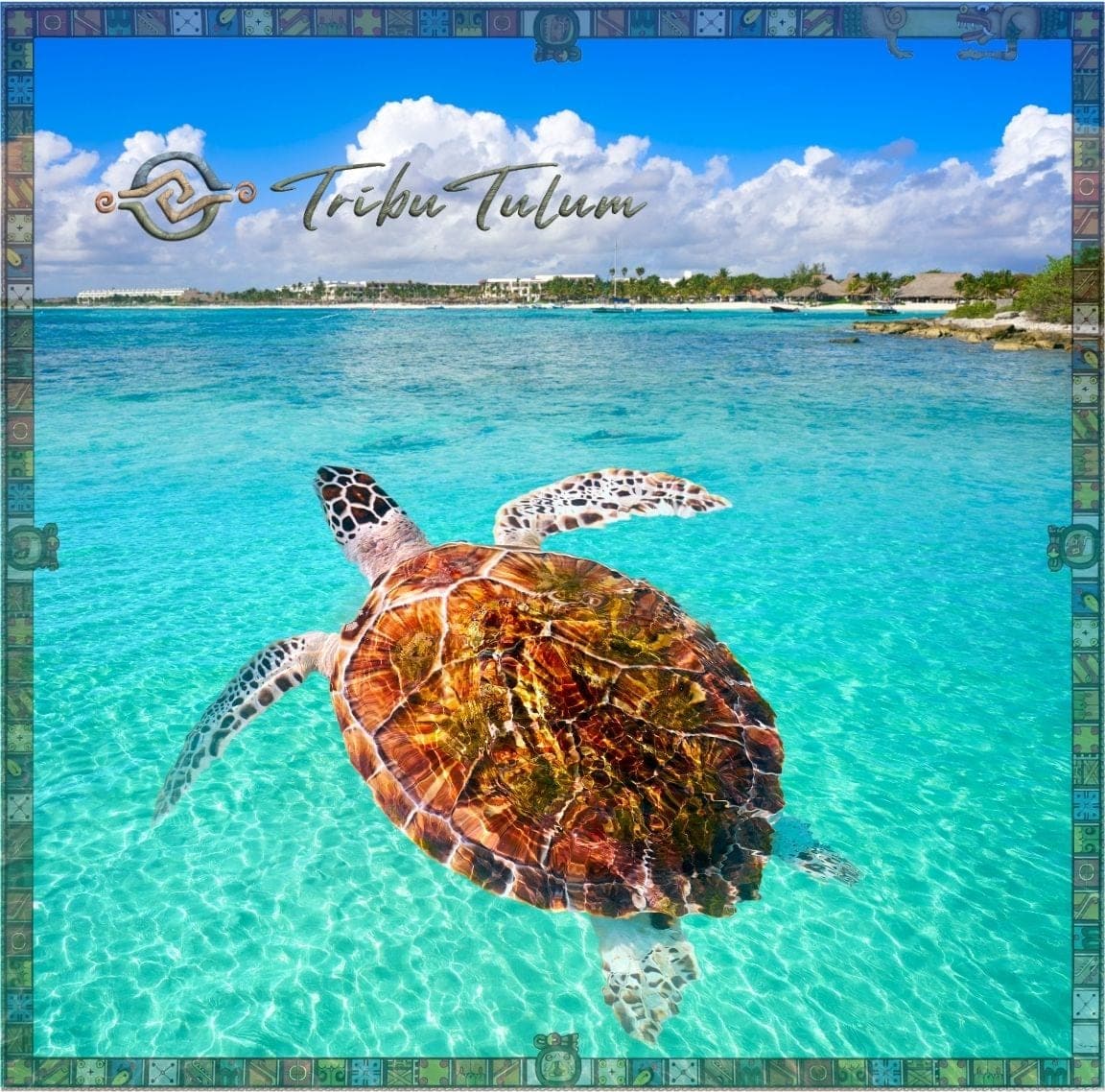
The Mesoamerican Reef (Mesoamerican Reef System, MAR) extends 1,000+ km from Honduras to Isla Contoy, Mexico, constituting the world's second-largest barrier reef after Australia's Great Barrier Reef. Off Tulum's coast, the reef sits 100-300 meters from the beach at a depth of 3-15 meters. It harbors 500+ fish species (queen angelfish, grouper, parrotfish, barracuda), 65 coral species (brain coral, elkhorn coral, star coral), 350 mollusk species, and 164 marine sponge species. Green turtles (Chelonia mydas) and hawksbill turtles (Eretmochelys imbricata) feed on seagrass meadows adjacent to the reef.
Tropical Forest: Monkeys, Jaguars, and Toucans#
The deciduous lowland forest and semi-evergreen medium forest surround Tulum with canopy cover extending toward the Sian Ka'an Reserve. The jaguar (Panthera onca), the region's apex predator, maintains an estimated population of 1,800 individuals on the Yucatan Peninsula. Spider monkeys (Ateles geoffroyi), classified as endangered by the IUCN, are regularly spotted in treetops at Tulum's archaeological zone and surrounding jungle. Keel-billed toucans (Ramphastos sulfuratus), turquoise-browed motmots (Eumomota superciliosa), and yellow-headed parrots (Amazona oratrix) inhabit the tree canopy. Other frequent mammals: coatis (Nasua narica), white-tailed deer (Odocoileus virginianus), and nine-banded armadillos (Dasypus novemcinctus).
Cenotes: Unique Freshwater Ecosystems#
The cenotes of the Yucatan Peninsula constitute the world's most extensive underground river system, with over 10,000 registered cenotes. These freshwater ecosystems harbor endemic species adapted to darkness: the blind cave fish (Typhliasina pearsei), cave shrimp (Creaseria morleyi), and amphipod (Tuluweckelia cernua). In open cenotes, freshwater turtles (Kinosternon integrum), molly fish (Poecilia mexicana), and freshwater eels share space with human swimmers. Tree roots penetrating cenotes create microhabitats where fruit bats (Artibeus jamaicensis) nest in the upper caverns.
Mangroves: Crocodiles and Coastal Birds#
Tulum's coastal mangroves, particularly in the Sian Ka'an zone and Casa Cenote, function as a natural nursery for juvenile fish, crustaceans, and migratory birds. The American crocodile (Crocodylus acutus) inhabits mangrove channels with stable populations monitored by CONANP. Caribbean pink flamingos (Phoenicopterus ruber) concentrate in Muyil Lagoon and Sian Ka'an's coastal lagoons, with colonies of 1,000-3,000 individuals between March and August. Tricolored herons, roseate spoonbills, brown pelicans, and olivaceous cormorants complete the mangrove bird landscape.
Beaches: Sea Turtles and Horseshoe Crabs#
Tulum's beaches serve as nesting zones for 4 of the world's 7 sea turtle species: loggerhead turtle (Caretta caretta), green turtle (Chelonia mydas), hawksbill turtle (Eretmochelys imbricata), and leatherback turtle (Dermochelys coriacea). The nesting season spans May to October, with 15,000+ nests recorded in 2025 on Tulum and Riviera Maya coasts alone. Horseshoe crabs (Limulus polyphemus), living fossils 450 million years old, are found in shallow waters off the beaches. Hermit crabs, striped iguanas (Ctenosaura similis), and shorebirds like the sanderling (Calidris alba) complete the beach ecosystem.
The 10 Emblematic Species You Can See in Tulum#
-
Green turtle (Chelonia mydas): Adult weight 150-200 kg, shell 1-1.2 m. Spotted year-round in Akumal bays and off Tulum ruins feeding on seagrass.
-
Jaguar (Panthera onca): The Americas' largest feline, weight 56-96 kg. Inhabits Sian Ka'an and the jungle west of Tulum. Rare sighting but documented with camera traps.
-
Spider monkey (Ateles geoffroyi): Weight 6-9 kg, 80 cm prehensile tail. Groups of 15-25 individuals observed at Tulum's archaeological zone and nearby parks.
-
Caribbean pink flamingo (Phoenicopterus ruber): Height 1.2-1.5 m, intense pink from shrimp diet. Colonies at Muyil Lagoon, Sian Ka'an. Best season: March-August.
-
American crocodile (Crocodylus acutus): Length 2-4 m in the region. Inhabits coastal mangroves and Casa Cenote channels. Protected species with controlled sighting.
-
Keel-billed toucan (Ramphastos sulfuratus): 15-20 cm multicolored bill. Inhabits the medium forest canopy. Observed on Sian Ka'an trails and cenote surroundings.
-
Turquoise-browed motmot (Eumomota superciliosa): National bird of El Salvador. 30 cm pendulum-shaped tail. Frequent at open cenotes and lowland forest.
-
Caribbean manta ray (Mobula birostris): Wingspan 3-5 m. Seasonal sighting December-March in deep waters off the coast.
-
Whale shark (Rhincodon typus): The world's largest fish (8-12 m). Sighting season: May-September at Isla Holbox and Isla Mujeres (2-3 hours from Tulum).
-
Caribbean manatee (Trichechus manatus): Weight 400-600 kg, length 3-4 m. Inhabits protected bays and underground rivers. Documented sighting at Casa Cenote and Sian Ka'an bay.
Where and When to Watch Wildlife in Tulum#
| Species | Location | Best Season | Probability |
|---|---|---|---|
| Green turtle | Akumal, Tulum reef | Year-round | High (90%+) |
| Loggerhead turtle | Nesting beaches | May-October | Medium (night) |
| Spider monkey | Archaeological zone, Sian Ka'an | Year-round | High (80%) |
| Jaguar | Sian Ka'an (camera traps) | Year-round | Low (5%) |
| Pink flamingo | Muyil Lagoon, Sian Ka'an | March-August | High (85%) |
| Crocodile | Mangroves, Casa Cenote | Year-round | Medium (40%) |
| Toucan | Jungle, Sian Ka'an trails | November-April | Medium (50%) |
| Manta ray | Deep coast | December-March | Medium (30%) |
| Whale shark | Holbox/Isla Mujeres | May-September | High (90%) |
| Manatee | Casa Cenote, bays | Year-round | Low (15%) |
Bird sightings peak between November and April, when 200+ migratory North American species join 150+ resident species. Guided birdwatching tours in Sian Ka'an record 40-80 species per morning outing (5:30-10:00 AM).
Responsible Wildlife Tourism in Tulum#
Responsible wildlife tourism in Tulum follows principles established by CONANP and Mexico's Official Standard NOM-059:
- Minimum distance: 3 meters from sea turtles, 10 meters from crocodiles, 15 meters from manatees. Turtle snorkeling tours at Akumal limit groups to 6 people with a certified guide.
- No touching: Any wild animal (fine up to $1,000,000 MXN per the General Wildlife Law).
- Flash off: Flash photography disorients turtles during nighttime nesting and disturbs nesting birds.
- Biodegradable sunscreen: Mandatory at cenotes and reef zones to prevent coral bleaching.
- Respect schedules: Turtle release tours operate exclusively at sunset (August-November) with limited capacity of 20-30 people.
Sea Turtle Season (Full Detail)#
Sea turtle nesting and hatching in Tulum extends from May to November with species-specific variations. For the complete monthly calendar, data on each species, and release locations, check the sea turtle season in Tulum guide.
Sian Ka'an: The Greatest Biodiversity Reserve#
The Sian Ka'an Biosphere Reserve concentrates the region's highest biodiversity density with 103 mammal species, 336 bird species, 42 amphibians and reptiles, and 100+ invertebrates across its 528,000 protected hectares.
Snorkeling and Diving to See Marine Life#
The coral reef off Tulum and the cenotes offer direct access to marine life. Diving tours at Tulum's reefs and cenotes include immersions with turtles, rays, and tropical fish. The Tulum beaches with the best shore snorkeling are Playa Ruinas and Akumal.